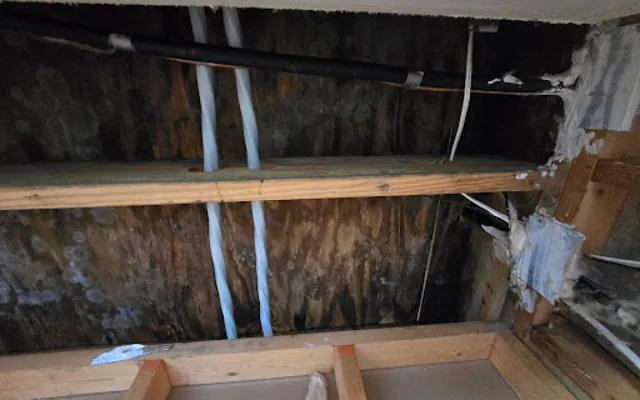
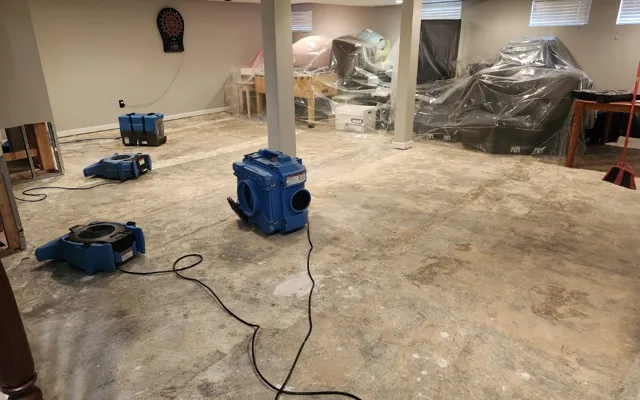
When water gets into a Magnolia, WA attic, local crews respond around the clock to dry the space using IICRC-standard methods, protecting the structure and preventing costly mold growth.

A restoration crew responds day or night to a Magnolia home, tracing the attic leak back to its source on the roof. They use moisture meters to map the full wet area in the attic, providing a clear picture before any work starts.
Saturated insulation in an attic cannot be effectively dried. Technicians carefully bag and remove all affected batts or blown-in material from the Magnolia home, exposing the roof decking and framing so the drying process can work directly on the wood.
Air movers and commercial dehumidifiers are staged in the attic to pull moisture from the rafters and sheathing. The crew takes daily moisture readings until the wood meets a verified dry standard, documenting every step for the homeowner.

Attic water damage cleanup in Magnolia usually runs from about $1,500 to $6,000, driven by how much insulation is saturated, whether framing and sheathing need extended drying, and how far the water traveled toward the ceiling below. A small isolated flashing leak sits at the low end, while widespread insulation loss and wet decking across a large attic sits higher. The crew documents moisture readings and photos so the loss can be itemized for the carrier.
On Magnolia's sloping, bluff-lined lots, water from heavy rain and hillside runoff often finds its way under flashing or through compromised roof sections. This can lead to a slow drip into the attic space, saturating insulation and threatening the ceiling and structural wood below before it is even noticed. The area's wet marine climate means persistent rain can overwhelm older roofs and flashing on Magnolia's bluff-top homes. Meanwhile, stormwater and hillside runoff channel toward foundations below, sometimes leading to seepage that can travel upward into attic spaces from lower levels. From Magnolia, crews also cover nearby University District, Georgetown, Ballard, Fremont, Wallingford, Green Lake. See every neighborhood and town on the full service area page.
See all areas servedEvery loss is photographed, measured, and logged from the first visit, so the paperwork holds up with the insurance carrier.
Technicians follow recognized IICRC drying standards and prove it with daily moisture readings on Magnolia homes, not guesswork.
Emergency dispatch any hour of the day or night, with a real crew on the way across the Puget Sound area, not a callback in the morning.
A real crew dispatched any hour, not a callback in the morning.
Trained technicians following recognized IICRC drying standards.
Truck-mounted, portable, and submersible for any size loss.
The loss is documented and billed to the carrier directly.
Drying time depends on the extent of the leak and the materials involved. For a typical job in the area, where insulation is removed and only framing needs drying, the process often takes two to four days. The crew monitors progress with daily moisture readings.
Most homeowner policies in Washington cover sudden, accidental water damage. Local crews document the source of the leak, all affected materials, and the drying process with photos and moisture logs. This creates a clear, itemized report that helps support a claim with the insurance carrier.
Crews are on call 24 hours a day and can be on the way to Magnolia within the hour.
Call (206) 984-4939