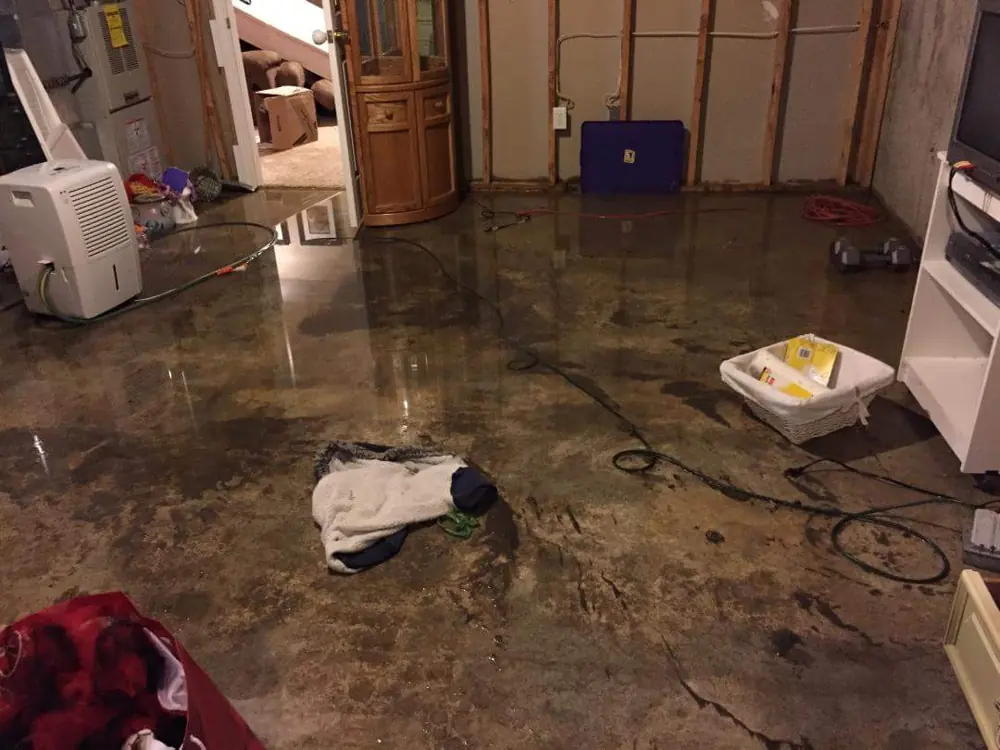
An HVAC system's condensate line or drain pan can overflow quietly and soak the ceiling, closet, or floor beneath the unit. Prompt drying and moisture verification keep a slow condensation leak from spreading in Seattle homes.

A crew responds, confirms the system is off, and inspects the condensate line, pan, and area below to trace the overflow and map the wet zone.
Standing water is extracted, and the ceiling, closet, or floor below the unit is opened where needed to reach saturated framing.
Air movers and dehumidifiers dry the affected drywall, framing, and flooring to a verified target while the condensate issue is corrected.
Readings confirm the area has dried, and the loss is documented with photos for the insurance claim.

While help is on the way, these first steps, done only where it is safe, limit the damage and protect the insurance claim.
Shut the supply off at the source, or close the home's main valve if the source is not obvious. Stopping the flow limits the damage more than anything else.
Switch off electricity to the affected area, but only if the breaker can be reached without standing in or touching the water.
Get a crew dispatched right away. The sooner extraction and drying begin, the more flooring, drywall, and belongings can be saved.
Take photos and a short video of the water and the affected rooms before anything is moved, so the insurance claim starts strong.
HVAC condensation cleanup in Seattle generally runs from about $800 to $3,500, depending on how long the overflow ran, whether it soaked a ceiling or closet framing, and how much drywall must be dried or removed. A caught-early pan overflow sits low, while a clogged line that dripped for weeks into a ceiling sits higher. The crew documents moisture readings and photos so the loss can be submitted to the carrier.
Crews reach Seattle and the surrounding Puget Sound communities fast, from Ballard, Fremont, Queen Anne, and Capitol Hill to West Seattle, Shoreline, Burien, Renton, Bellevue, and Kirkland. See the full list on the areas served across Seattle page.
See all areas servedEvery loss is photographed, measured, and logged from the first visit, so the paperwork holds up with the insurance carrier.
Technicians follow recognized IICRC drying standards and prove it with daily moisture readings on Seattle homes, not guesswork.
Emergency dispatch any hour of the day or night, with a real crew on the way across the Puget Sound area, not a callback in the morning.
A real crew dispatched any hour, not a callback in the morning.
Trained technicians following recognized IICRC drying standards.
Truck-mounted, portable, and submersible for any size loss.
The loss is documented and billed to the carrier directly.
The most common causes are a condensate drain line clogged with algae or debris and a drain pan that has cracked or rusted through. Instead of draining away, the moisture the system pulls from the air overflows onto the ceiling, closet, or floor below the unit, often slowly enough to go unnoticed for weeks.
In Seattle, indoor HVAC units are frequently tucked into attics, closets, and crawlspaces, so a slow condensate drip lands out of sight. In the humid marine air the resulting dampness stains and swells materials gradually, and homeowners often discover it only when a ceiling stain, a musty smell, or a soft floor appears.
Clearing the condensate line or replacing a cracked pan is handled by a qualified HVAC technician. The crew stops and dries the water damage and coordinates timing so the ceiling, closet, or floor is dried and verified around the equipment repair rather than sealed up while still wet.
Sometimes. If the drywall was only lightly stained and readings show it dried quickly, it can be sealed and repainted. When the gypsum has sagged or stayed saturated, that section is removed so the cavity can be dried and repaired. The moisture readings guide that decision.
A sudden overflow may be covered, while long-term dripping from a neglected system is often treated as a maintenance issue and excluded. The crew documents the source and moisture readings so the claim reflects whether the loss was sudden or the result of a gradual, unaddressed problem.
Seattle crews are on call 24 hours a day, local and fast, and can be on the way within the hour.
Call (206) 984-4939