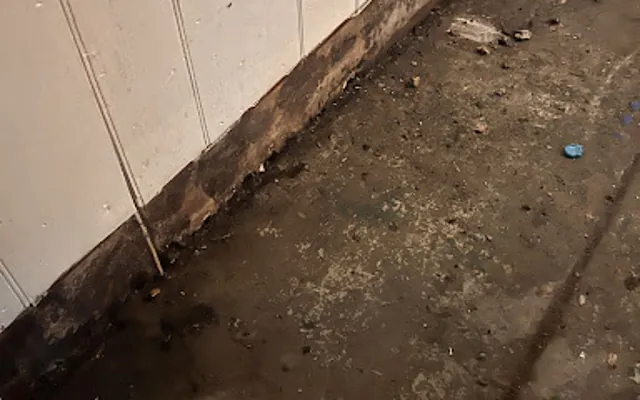
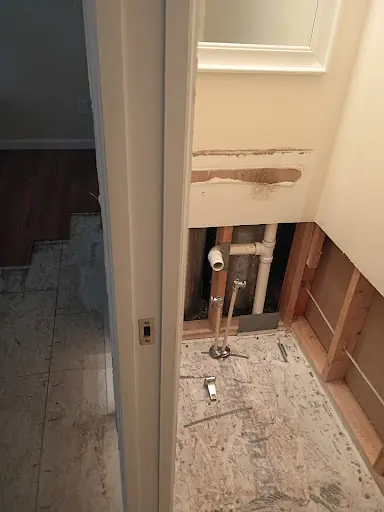
A sewage backup floods the lowest level with contaminated water and creates a real health hazard. In Seattle's older neighborhoods, aging lines make backups common, and safe extraction plus sanitizing protect the home.

A crew responds around the clock, isolates the contaminated area with protective barriers, and confirms the backup source is controlled.
Contaminated water is extracted with dedicated equipment, and saturated carpet, pad, drywall, and porous items are removed and bagged for disposal.
Hard surfaces and the affected structure are cleaned and treated with antimicrobial products to address the Category 3 contamination.
Air movers and dehumidifiers dry the sanitized structure to a verified target, and readings and photos are logged for the insurance claim.

While help is on the way, these first steps, done only where it is safe, limit the damage and protect the insurance claim.
Shut the supply off at the source, or close the home's main valve if the source is not obvious. Stopping the flow limits the damage more than anything else.
Switch off electricity to the affected area, but only if the breaker can be reached without standing in or touching the water.
Get a crew dispatched right away. The sooner extraction and drying begin, the more flooring, drywall, and belongings can be saved.
Take photos and a short video of the water and the affected rooms before anything is moved, so the insurance claim starts strong.
Sewage backup cleanup in Seattle typically runs from about $2,500 to $9,000, driven by how much contaminated water entered, how much porous material and drywall must be removed, and the size of the area needing sanitizing and drying. A small floor-drain backup sits low, while sewage across a finished basement sits higher. The crew documents moisture readings and photos so the loss can be itemized for the carrier.
Crews reach Seattle and the surrounding Puget Sound communities fast, from Ballard, Fremont, Queen Anne, and Capitol Hill to West Seattle, Shoreline, Burien, Renton, Bellevue, and Kirkland. See the full list on the areas served across Seattle page.
See all areas servedEvery loss is photographed, measured, and logged from the first visit, so the paperwork holds up with the insurance carrier.
Technicians follow recognized IICRC drying standards and prove it with daily moisture readings on Seattle homes, not guesswork.
Emergency dispatch any hour of the day or night, with a real crew on the way across the Puget Sound area, not a callback in the morning.
A real crew dispatched any hour, not a callback in the morning.
Trained technicians following recognized IICRC drying standards.
Truck-mounted, portable, and submersible for any size loss.
The loss is documented and billed to the carrier directly.
Sewage is a Category 3 biohazard, meaning it carries bacteria, viruses, and other pathogens. Contact and even the airborne exposure pose real health risks. That is why cleanup involves containment, protective equipment, removal of porous materials the sewage touched, and thorough sanitizing, well beyond what a clean-water loss requires.
Many neighborhoods are served by decades-old sewer lines prone to root intrusion, grease buildup, and collapse. Some areas also have combined storm-and-sewer systems that surcharge during heavy rain. Together with the region's long wet season, that makes sewage backups into basements a recurring problem across the older parts of the city.
Porous materials the sewage contacted, such as carpet, pad, saturated drywall, insulation, and many stored belongings, are generally removed and discarded because they cannot be reliably sanitized. Hard, non-porous surfaces like tile, sealed concrete, and sealed wood can usually be cleaned, treated, and dried.
Clearing the blockage or repairing the sewer line is handled by a qualified plumber or drain contractor. The crew focuses on the biohazard cleanup, safe extraction, sanitizing, and drying, and coordinates so the restoration follows the line repair when one is needed.
It is often covered when the policy carries sewer and drain backup coverage, a specific add-on many homeowners have. The crew documents the source, the Category 3 classification, the materials removed, and moisture readings so the claim reflects the biohazard event and the work performed.
Seattle crews are on call 24 hours a day, local and fast, and can be on the way within the hour.
Call (206) 984-4939