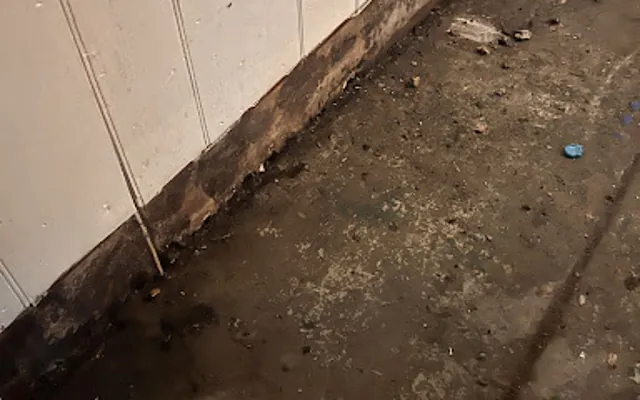
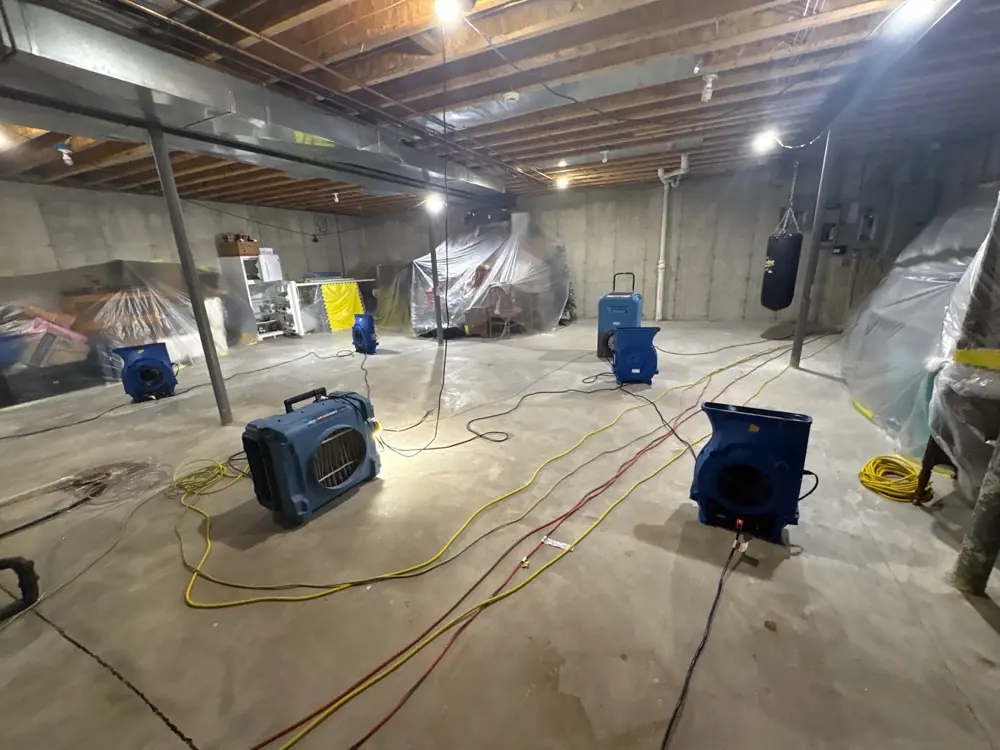
In outlying Seattle-area properties on septic systems, a saturated drain field or a full tank can back contaminated water into the home. Safe extraction, sanitizing, and drying protect the household after a septic backup.

A crew responds, contains the contaminated area to prevent spread, and confirms the backup is controlled before cleanup begins.
The contaminated water is extracted with equipment dedicated to unsanitary losses, and saturated porous materials are removed and bagged for disposal.
Hard surfaces, floors, and the affected structure are cleaned and treated with antimicrobial products to address the biohazard.
Air movers and dehumidifiers dry the sanitized structure to a verified target, and readings and photos are logged for the insurance claim.

While help is on the way, these first steps, done only where it is safe, limit the damage and protect the insurance claim.
Shut the supply off at the source, or close the home's main valve if the source is not obvious. Stopping the flow limits the damage more than anything else.
Switch off electricity to the affected area, but only if the breaker can be reached without standing in or touching the water.
Get a crew dispatched right away. The sooner extraction and drying begin, the more flooring, drywall, and belongings can be saved.
Take photos and a short video of the water and the affected rooms before anything is moved, so the insurance claim starts strong.
Septic backup cleanup in the Seattle area typically runs from about $2,000 to $8,000, driven by how much contaminated water entered, how much porous material must be removed, and the size of the area needing sanitizing and drying. A small contained backup sits low, while contaminated water across a finished lower level sits higher. The crew documents moisture readings and photos so the loss can be itemized for the carrier.
Crews reach Seattle and the surrounding Puget Sound communities fast, from Ballard, Fremont, Queen Anne, and Capitol Hill to West Seattle, Shoreline, Burien, Renton, Bellevue, and Kirkland. See the full list on the areas served across Seattle page.
See all areas servedEvery loss is photographed, measured, and logged from the first visit, so the paperwork holds up with the insurance carrier.
Technicians follow recognized IICRC drying standards and prove it with daily moisture readings on Seattle homes, not guesswork.
Emergency dispatch any hour of the day or night, with a real crew on the way across the Puget Sound area, not a callback in the morning.
A real crew dispatched any hour, not a callback in the morning.
Trained technicians following recognized IICRC drying standards.
Truck-mounted, portable, and submersible for any size loss.
The loss is documented and billed to the carrier directly.
Yes. While the city core is on municipal sewer, many properties on the outlying edges of King County and the surrounding communities rely on septic tanks and drain fields. Those systems can back up, especially during the region's heaviest rains, which is why septic backup cleanup is part of serving the wider Seattle area.
A septic drain field disposes of effluent by letting it soak into the soil. During Seattle's long, heavy rains the ground becomes saturated and the field can no longer absorb water, so the whole system backs up. A full tank or a clogged outlet line makes a rain-driven backup more likely.
Yes. It is heavily contaminated with sewage, so it is a biohazard and a health risk, not just a water problem. The crew treats it as an unsanitary loss, wearing protective equipment, removing porous materials the water contacted, and sanitizing hard surfaces before any drying begins.
Pumping the tank and repairing the system or drain field is handled by a qualified septic contractor. The crew focuses on safely extracting the contaminated water, sanitizing the home, and drying the structure, then coordinates so the cleanup follows the system service.
Backups are often covered when the policy includes sewer and drain backup coverage, which many homeowners carry as an add-on. The crew documents the source, the contamination category, and moisture readings so the claim reflects the event and the sanitation work performed.
Seattle crews are on call 24 hours a day, local and fast, and can be on the way within the hour.
Call (206) 984-4939