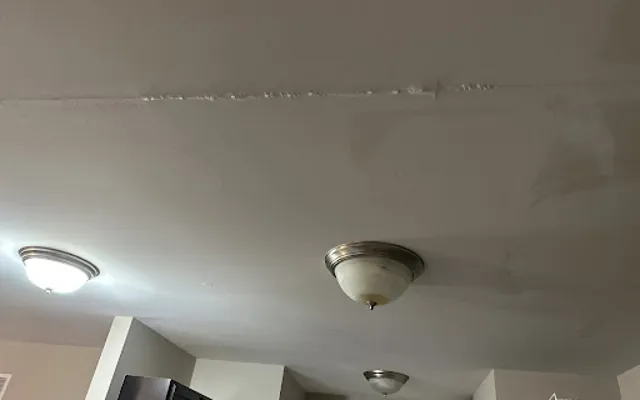
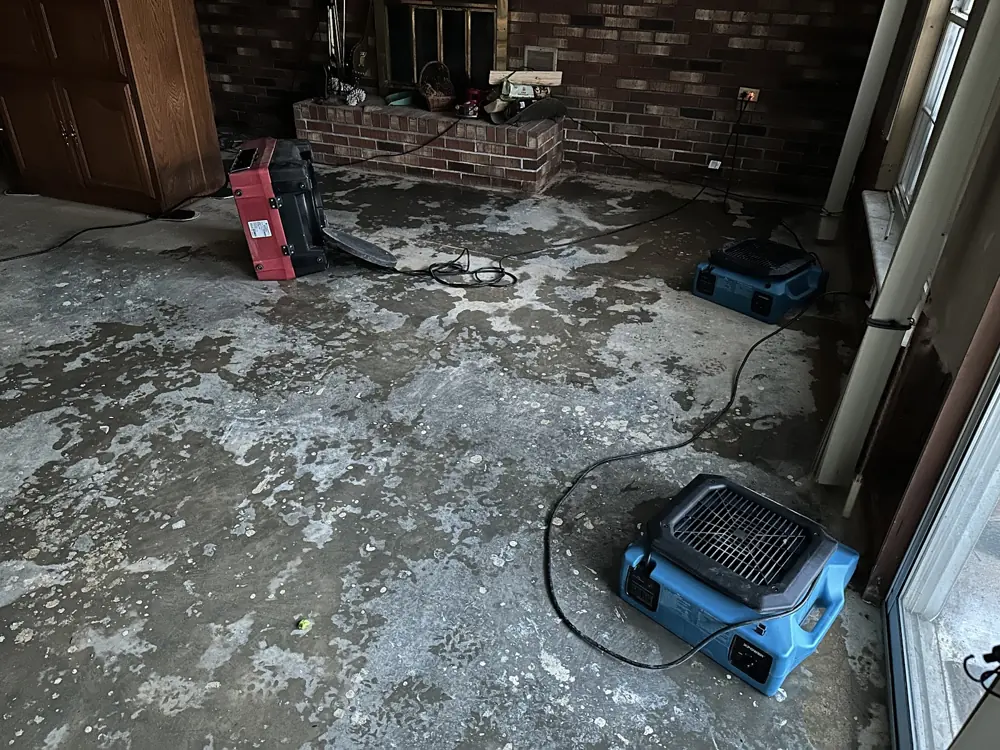
A stained or sagging ceiling means water is already sitting in the cavity above. In Seattle's rainy climate that water often comes from the roof or an upstairs bathroom, and fast drying prevents a collapse and mold.

A crew responds quickly and traces the water to a roof leak, an upstairs fixture, or a pipe above, so drying targets the true source rather than only the stain.
Where the ceiling holds trapped water, small relief openings release it safely, and standing water on the floor below is extracted.
Air movers and dehumidifiers dry the ceiling cavity, joists, and insulation above the drywall so moisture does not linger out of sight.
The ceiling and cavity are dried to a verified target, and readings and photos are documented for the homeowner's insurance claim.

While help is on the way, these first steps, done only where it is safe, limit the damage and protect the insurance claim.
Shut the supply off at the source, or close the home's main valve if the source is not obvious. Stopping the flow limits the damage more than anything else.
Switch off electricity to the affected area, but only if the breaker can be reached without standing in or touching the water.
Get a crew dispatched right away. The sooner extraction and drying begin, the more flooring, drywall, and belongings can be saved.
Take photos and a short video of the water and the affected rooms before anything is moved, so the insurance claim starts strong.
Ceiling water damage cleanup in Seattle usually runs from about $1,000 to $4,500, depending on how much of the ceiling is saturated, whether the cavity and insulation above stayed wet, and if the drywall must be removed and replaced. A small isolated stain sits low, while a sagging, water-logged ceiling with wet insulation sits higher. The crew documents moisture readings and photos so the loss can be itemized for the carrier.
Crews reach Seattle and the surrounding Puget Sound communities fast, from Ballard, Fremont, Queen Anne, and Capitol Hill to West Seattle, Shoreline, Burien, Renton, Bellevue, and Kirkland. See the full list on the areas served across Seattle page.
See all areas servedEvery loss is photographed, measured, and logged from the first visit, so the paperwork holds up with the insurance carrier.
Technicians follow recognized IICRC drying standards and prove it with daily moisture readings on Seattle homes, not guesswork.
Emergency dispatch any hour of the day or night, with a real crew on the way across the Puget Sound area, not a callback in the morning.
A real crew dispatched any hour, not a callback in the morning.
Trained technicians following recognized IICRC drying standards.
Truck-mounted, portable, and submersible for any size loss.
The loss is documented and billed to the carrier directly.
Yes. A sagging or bulging ceiling means water is pooling in the drywall above and the gypsum is losing strength. It can give way and drop wet material without much warning. Staying out from under it and getting the trapped water relieved through a controlled opening is the safe first step.
The crew works upward from the stain, checking the roof, upstairs fixtures, and any pipes running above the ceiling. In Seattle, winter roof leaks and upstairs bathroom plumbing are the usual sources. Moisture meters and the pattern of the stain help pinpoint the entry point so drying and repair target the real cause.
Sometimes. If the drywall is only lightly marked and readings show it dried quickly, it can be sealed and repainted. When the gypsum has sagged, crumbled, or stayed saturated, that section is removed so the cavity can be dried and new drywall installed. The moisture readings guide that decision.
Wet insulation above a ceiling holds water and slows drying, so it is checked with a meter. Lightly damp insulation can often dry with airflow, while saturated batts are removed because they lose their value and stay wet long enough to invite mold in the marine climate.
A sudden source such as a burst pipe or a storm-driven roof leak is commonly covered, while long-term wear is often excluded. The crew documents where the water originated along with moisture readings and photos so the claim clearly ties the ceiling damage to a covered event.
Seattle crews are on call 24 hours a day, local and fast, and can be on the way within the hour.
Call (206) 984-4939