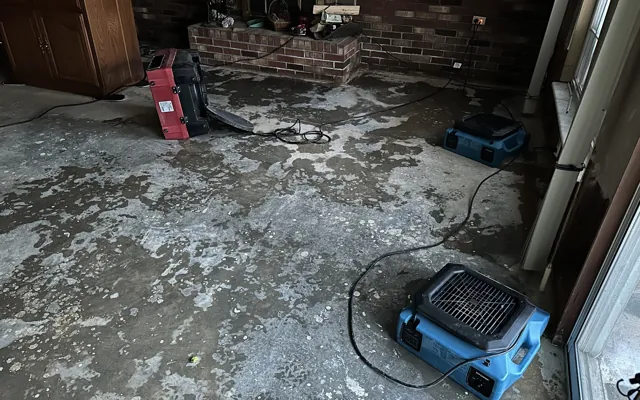
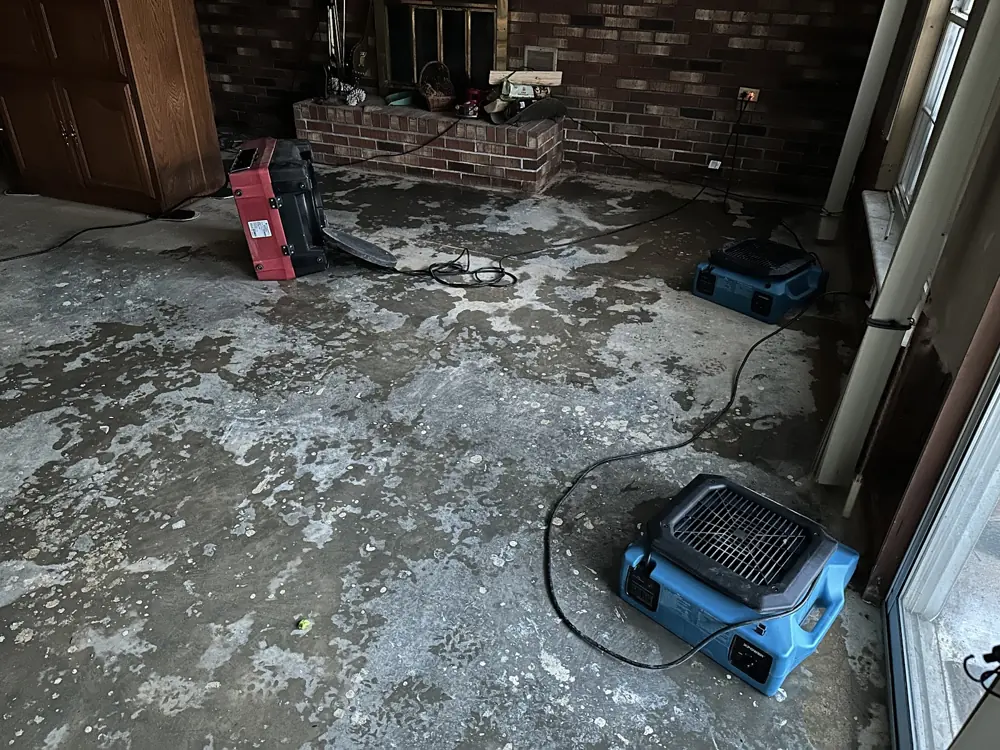
Seattle's heavy winter rains and atmospheric-river storms flood basements, crawlspaces, and low-lying rooms across the city. Fast extraction, sanitizing where needed, and moisture-verified drying get flooded homes back in order.

A crew responds around the clock, checks for electrical and contamination hazards, and confirms the water source is controlled before entering.
Submersible pumps and truck-mounted units clear standing storm water from basements, crawlspaces, and low-lying rooms quickly.
Debris and saturated porous materials are removed, and surfaces are cleaned and treated where the storm water carried contaminants.
Air movers and dehumidifiers dry the structure to a verified target, and readings and photos are logged for the insurance claim.

While help is on the way, these first steps, done only where it is safe, limit the damage and protect the insurance claim.
Shut the supply off at the source, or close the home's main valve if the source is not obvious. Stopping the flow limits the damage more than anything else.
Switch off electricity to the affected area, but only if the breaker can be reached without standing in or touching the water.
Get a crew dispatched right away. The sooner extraction and drying begin, the more flooring, drywall, and belongings can be saved.
Take photos and a short video of the water and the affected rooms before anything is moved, so the insurance claim starts strong.
Storm flood cleanup in Seattle typically runs from about $2,000 to $9,000, driven by how much water entered, whether it was clean runoff or carried contaminants, and how much flooring, drywall, and belongings must be removed. A contained basement pump-out sits low, while a widely flooded lower level with contamination sits higher. The crew documents moisture readings and photos so the loss can be itemized for the carrier.
Crews reach Seattle and the surrounding Puget Sound communities fast, from Ballard, Fremont, Queen Anne, and Capitol Hill to West Seattle, Shoreline, Burien, Renton, Bellevue, and Kirkland. See the full list on the areas served across Seattle page.
See all areas servedEvery loss is photographed, measured, and logged from the first visit, so the paperwork holds up with the insurance carrier.
Technicians follow recognized IICRC drying standards and prove it with daily moisture readings on Seattle homes, not guesswork.
Emergency dispatch any hour of the day or night, with a real crew on the way across the Puget Sound area, not a callback in the morning.
A real crew dispatched any hour, not a callback in the morning.
Trained technicians following recognized IICRC drying standards.
Truck-mounted, portable, and submersible for any size loss.
The loss is documented and billed to the carrier directly.
Seattle flooding comes from heavy, long-duration winter rain and atmospheric-river storms rather than hurricanes or storm surge. Days of rain overwhelm drainage and saturate the ground, so runoff pools against foundations and pushes into basements, crawlspaces, and low-lying rooms. It is a seasonal, rain-driven risk across the region.
It can be. Storm water that has run across yards, streets, and soil often picks up debris and contaminants, so it may be more than a clean-water event. The crew checks the water category, removes porous materials it soaked, and cleans and treats surfaces where contamination is present before drying the structure.
Prolonged storms saturate the ground until drainage can no longer keep up, so a property that stayed dry for years can flood when an unusually heavy or long storm finally exceeds the system's capacity. Changes in grading, aging drains, or clogged culverts nearby can also tip a previously dry home into flooding.
As fast as possible. The longer water sits, the more flooring, drywall, and framing are lost, and the greater the mold risk in the humid marine climate. Prompt extraction and drying, started as soon as the area is safe, make the difference between drying materials in place and replacing them.
It depends on the source and the policy. Water backing up through drains or entering from a sudden failure may be covered, while surface floodwater often requires separate flood coverage. The crew documents how the water entered and moisture readings so the claim reflects the actual cause.
Seattle crews are on call 24 hours a day, local and fast, and can be on the way within the hour.
Call (206) 984-4939