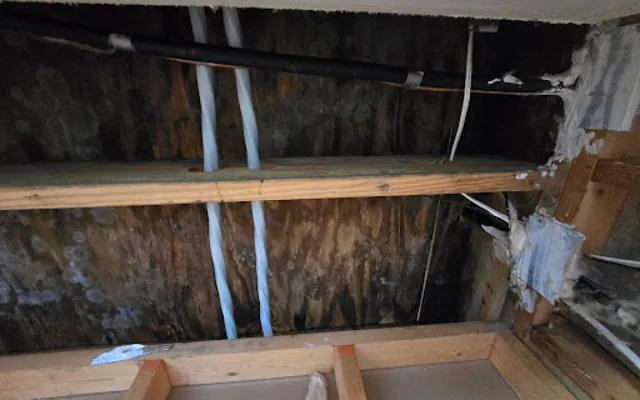
Seattle sees ice dams only in the occasional cold snap, but when snow and freezing temperatures line up, melt water backs up under shingles and into ceilings and walls. Fast drying limits the interior damage.

A crew responds, traces where the backed-up melt water entered, and maps the wet attic, ceiling, and wall areas with moisture meters.
Standing water is extracted and trapped water in ceilings is relieved through controlled openings to prevent sagging and collapse.
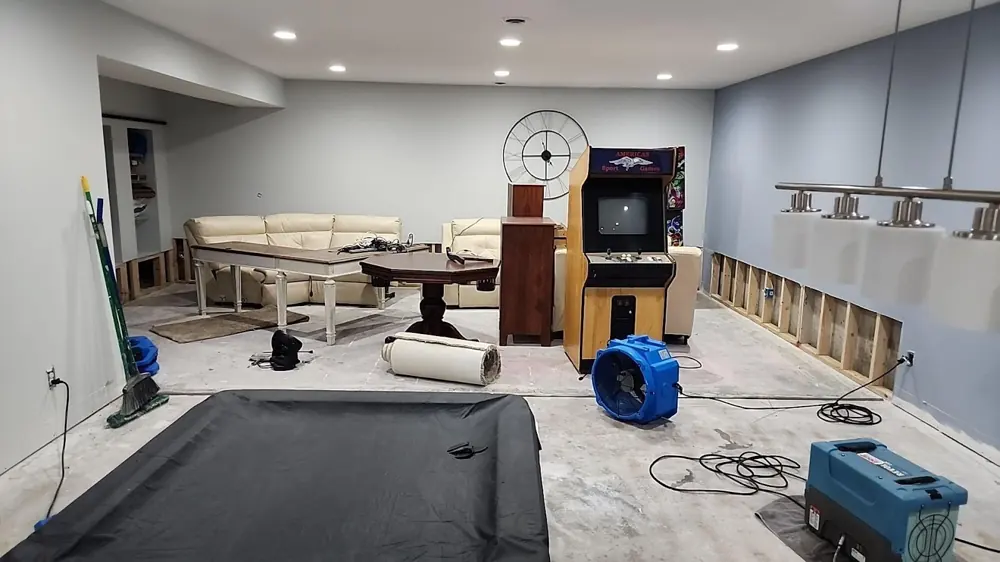
Air movers and dehumidifiers dry the attic, ceiling cavities, and wall spaces where melt water intruded, to a verified target.
The affected materials are dried to a verified target, and readings and photos are logged for the insurance claim.

While help is on the way, these first steps, done only where it is safe, limit the damage and protect the insurance claim.
Shut the supply off at the source, or close the home's main valve if the source is not obvious. Stopping the flow limits the damage more than anything else.
Switch off electricity to the affected area, but only if the breaker can be reached without standing in or touching the water.
Get a crew dispatched right away. The sooner extraction and drying begin, the more flooring, drywall, and belongings can be saved.
Take photos and a short video of the water and the affected rooms before anything is moved, so the insurance claim starts strong.
Ice dam water damage cleanup in Seattle typically runs from about $1,500 to $6,000, depending on how much melt water entered, whether attic insulation and ceilings stayed saturated, and how many rooms the intrusion reached. A single-room stain sits low, while water through the attic into several ceilings and walls sits higher. The crew documents moisture readings and photos so the loss can be itemized for the carrier.
Crews reach Seattle and the surrounding Puget Sound communities fast, from Ballard, Fremont, Queen Anne, and Capitol Hill to West Seattle, Shoreline, Burien, Renton, Bellevue, and Kirkland. See the full list on the areas served across Seattle page.
See all areas servedEvery loss is photographed, measured, and logged from the first visit, so the paperwork holds up with the insurance carrier.
Technicians follow recognized IICRC drying standards and prove it with daily moisture readings on Seattle homes, not guesswork.
Emergency dispatch any hour of the day or night, with a real crew on the way across the Puget Sound area, not a callback in the morning.
A real crew dispatched any hour, not a callback in the morning.
Trained technicians following recognized IICRC drying standards.
Truck-mounted, portable, and submersible for any size loss.
The loss is documented and billed to the carrier directly.
Only occasionally. The marine climate keeps most winters too mild for them, but when a snowfall is followed by a hard freeze, ice dams can form at the eaves. They are uncommon enough that many Seattle homeowners are unprepared, which is why a brief cold snap sometimes produces a wave of ice dam intrusion.
Melt water from the warmer upper roof runs down and refreezes at the cold eave, building a dam. Water then pools behind the ice with nowhere to drain and backs up under the shingles, seeping through the roof deck into the attic, ceilings, and walls. The leak is the trapped water, not the ice itself.
Climbing an icy roof is dangerous and can damage the shingles, so it is best left alone. The priority indoors is stopping the interior water damage, relieving trapped ceiling water safely, and drying the wet spaces. Once the weather warms, a roofing professional can address the roof and insulation causes.
Lightly damp insulation can sometimes dry with airflow, but insulation saturated by ice dam melt water is usually removed because it holds moisture and loses its value. Removing it also lets the crew dry the roof deck and framing above the ceiling, which is where the trapped water tends to collect.
Interior water damage from an ice dam is often covered as a sudden event, though coverage can vary by policy. The crew documents where the water entered and the moisture readings so the claim clearly ties the ceiling and wall damage to the ice dam intrusion.
Seattle crews are on call 24 hours a day, local and fast, and can be on the way within the hour.
Call (206) 984-4939