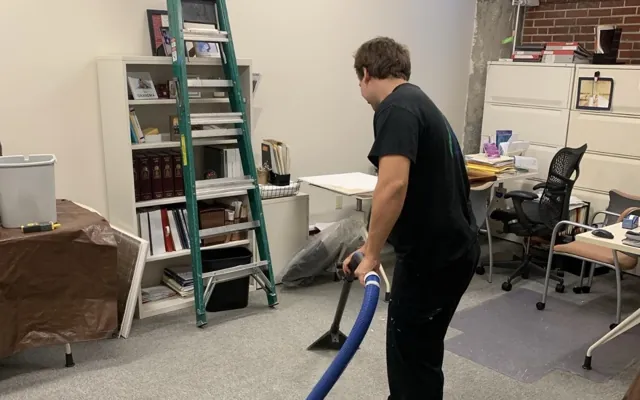
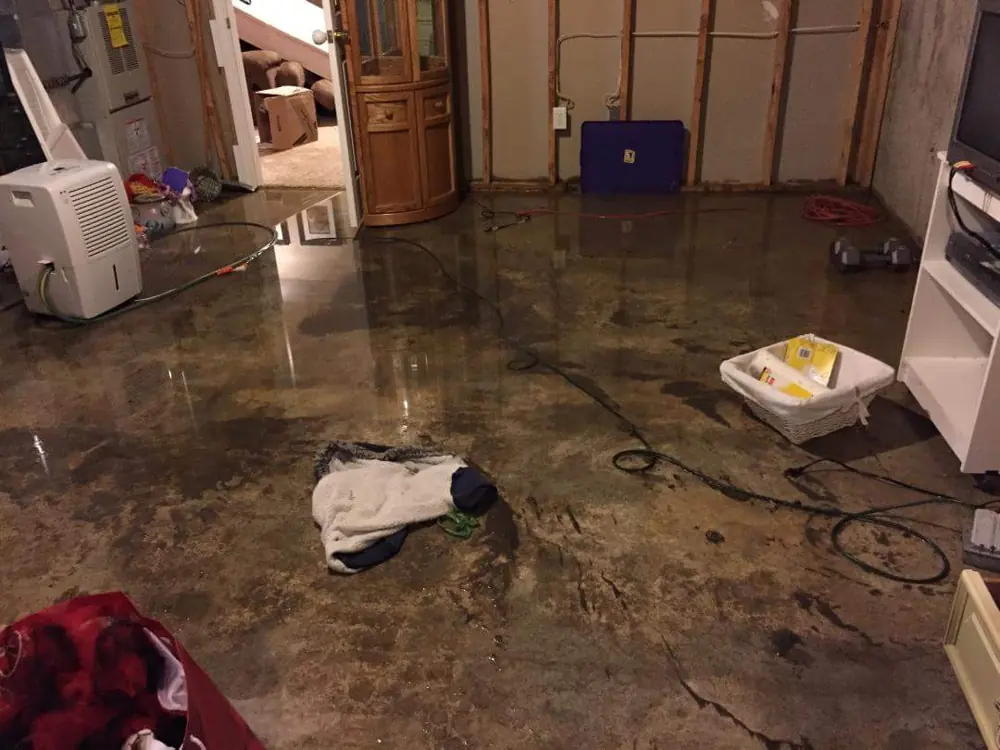
Whatever the source, the first job is getting the standing water out fast. Around-the-clock extraction with submersible pumps and truck-mounted units limits saturation in Seattle homes and starts the drying clock sooner.

A crew responds around the clock, checks for electrical and contamination hazards, and confirms the source is controlled before entering the water.
Submersible pumps handle deep standing water and truck-mounted or portable extractors pull the remaining water from floors and carpet.
Specialized tools draw trapped water from under flooring and out of pad and cavities so drying starts from a much drier baseline.
Air movers and dehumidifiers are staged, and initial moisture readings and photos are logged for the insurance claim.

While help is on the way, these first steps, done only where it is safe, limit the damage and protect the insurance claim.
Shut the supply off at the source, or close the home's main valve if the source is not obvious. Stopping the flow limits the damage more than anything else.
Switch off electricity to the affected area, but only if the breaker can be reached without standing in or touching the water.
Get a crew dispatched right away. The sooner extraction and drying begin, the more flooring, drywall, and belongings can be saved.
Take photos and a short video of the water and the affected rooms before anything is moved, so the insurance claim starts strong.
Water extraction in Seattle typically runs from about $500 to $3,500 as a standalone first step, depending on the volume of standing water, the area affected, and whether the water was clean or contaminated. A small clean-water extraction sits low, while pumping a deeply flooded basement sits higher, and extraction is usually the opening phase of a larger drying scope. The crew documents readings and photos so the full loss can be itemized for the carrier.
Crews reach Seattle and the surrounding Puget Sound communities fast, from Ballard, Fremont, Queen Anne, and Capitol Hill to West Seattle, Shoreline, Burien, Renton, Bellevue, and Kirkland. See the full list on the areas served across Seattle page.
See all areas servedEvery loss is photographed, measured, and logged from the first visit, so the paperwork holds up with the insurance carrier.
Technicians follow recognized IICRC drying standards and prove it with daily moisture readings on Seattle homes, not guesswork.
Emergency dispatch any hour of the day or night, with a real crew on the way across the Puget Sound area, not a callback in the morning.
A real crew dispatched any hour, not a callback in the morning.
Trained technicians following recognized IICRC drying standards.
Truck-mounted, portable, and submersible for any size loss.
The loss is documented and billed to the carrier directly.
Because standing water does the most damage while it sits. Every hour it remains, it penetrates deeper into flooring, drywall, and framing and raises the mold risk. Pulling the water out fast, before deep drying begins, is what keeps materials in a dryable state and limits how much has to be removed and replaced.
Extraction physically removes the standing and trapped water with pumps and extractors, while drying uses air movers and dehumidifiers to pull the remaining moisture out of the structure. Extraction comes first and removes the bulk of the water, which makes the drying phase faster and more effective.
Yes. Specialized sub-surface tools draw water out from under flooring and from carpet pad, where a standard extractor cannot reach. Removing that hidden water is important in Seattle's humid climate, since trapped moisture under a floor dries slowly and can keep the structure damp enough to grow mold.
It does. Clean water is extracted and the materials are often saved, while contaminated water from a drain or sewer backup calls for dedicated equipment, protective measures, and removal of porous materials. The crew checks the water category first so the extraction and the follow-up cleanup match the risk.
As part of a covered water loss, extraction is typically included in the claim. The crew documents the source, the water category, and initial moisture readings from the start so the extraction and the full drying scope are captured for the carrier.
Seattle crews are on call 24 hours a day, local and fast, and can be on the way within the hour.
Call (206) 984-4939