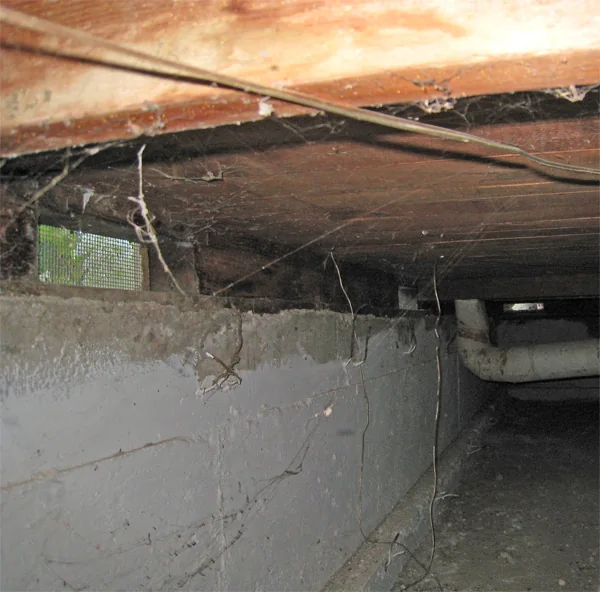
Nearly every Seattle home sits over a crawlspace, and the region's wet winters push groundwater and seepage into that hidden space year after year. Pumping it out and drying it protects the framing, ductwork, and air above.

A crew enters the crawlspace, checks for standing water and how far it has spread, and identifies whether the source is groundwater, runoff, or a failed pipe.
Submersible pumps and extraction units clear standing water from the crawlspace floor, and saturated sections of the vapor barrier are removed.
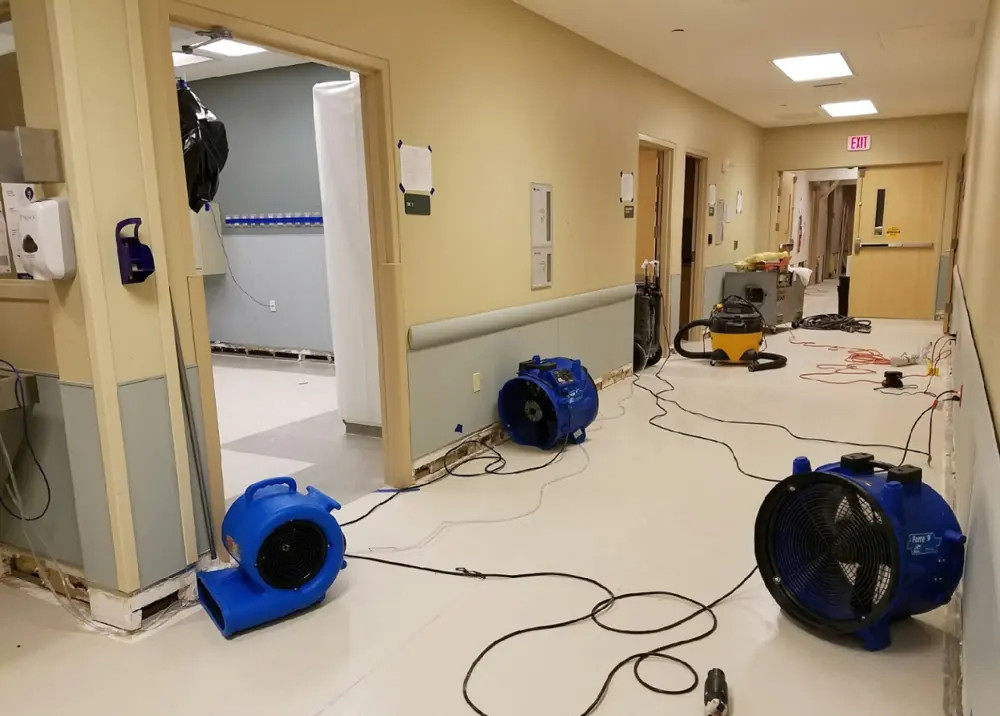
Air movers and dehumidifiers dry the framing, subfloor, and insulation, and affected surfaces are treated to address the musty, humid conditions.
The wood and structure are dried to a verified moisture target, and readings and photos are logged for the insurance claim and any drainage recommendation.

While help is on the way, these first steps, done only where it is safe, limit the damage and protect the insurance claim.
Shut the supply off at the source, or close the home's main valve if the source is not obvious. Stopping the flow limits the damage more than anything else.
Switch off electricity to the affected area, but only if the breaker can be reached without standing in or touching the water.
Get a crew dispatched right away. The sooner extraction and drying begin, the more flooring, drywall, and belongings can be saved.
Take photos and a short video of the water and the affected rooms before anything is moved, so the insurance claim starts strong.
Crawlspace water removal in Seattle typically runs from about $1,200 to $5,500, depending on how much standing water is present, whether the vapor barrier and insulation must be replaced, and how much drying the framing needs. A quick pump-out sits at the low end, while a saturated crawlspace with wet insulation and rotting subfloor sits higher. The crew documents moisture readings and photos so the loss can be itemized for the carrier.
Crews reach Seattle and the surrounding Puget Sound communities fast, from Ballard, Fremont, Queen Anne, and Capitol Hill to West Seattle, Shoreline, Burien, Renton, Bellevue, and Kirkland. See the full list on the areas served across Seattle page.
See all areas servedEvery loss is photographed, measured, and logged from the first visit, so the paperwork holds up with the insurance carrier.
Technicians follow recognized IICRC drying standards and prove it with daily moisture readings on Seattle homes, not guesswork.
Emergency dispatch any hour of the day or night, with a real crew on the way across the Puget Sound area, not a callback in the morning.
A real crew dispatched any hour, not a callback in the morning.
Trained technicians following recognized IICRC drying standards.
Truck-mounted, portable, and submersible for any size loss.
The loss is documented and billed to the carrier directly.
Yes. The large majority of Seattle houses, old and new, are built over a crawlspace rather than a slab. In the region's wet climate that space regularly takes on groundwater and runoff, which is why crawlspace water removal is one of the most frequent jobs trained crews handle across the city.
Warning signs include a persistent musty smell in the home, soft or cupping floors, higher indoor humidity, and rusty or damp ductwork. Because the space is hidden, many homeowners only learn of the water when a crew inspects it, so a check after a heavy rainy stretch is worthwhile.
Often, yes. A vapor barrier that has been submerged holds water against the soil and traps humidity, so saturated sections are removed and noted for replacement. A fresh barrier after drying helps keep future groundwater vapor from rising into the framing and the living space above.
Absolutely. Left alone, it rots the subfloor and joists, rusts ductwork and pipes, ruins insulation, and feeds mold that sends musty air upstairs. In the humid marine climate the wood stays damp long enough for real structural decay, which is why prompt removal and verified drying matter.
It depends on the source. A sudden event like a burst pipe under the house is commonly covered, while gradual groundwater seepage is often excluded as a maintenance issue. The crew documents the cause and moisture readings so the claim accurately reflects what caused the water.
Seattle crews are on call 24 hours a day, local and fast, and can be on the way within the hour.
Call (206) 984-4939