When groundwater or a burst pipe floods a lower level in Queen Anne, WA, local crews respond around the clock. They follow IICRC-standard methods to extract water, dry the structure, and document the process for the insurance claim.

Local crews respond 24/7 to calls in Queen Anne. Technicians first ensure the water source is stopped and check for electrical risks before entering the flooded lower level to begin assessment.
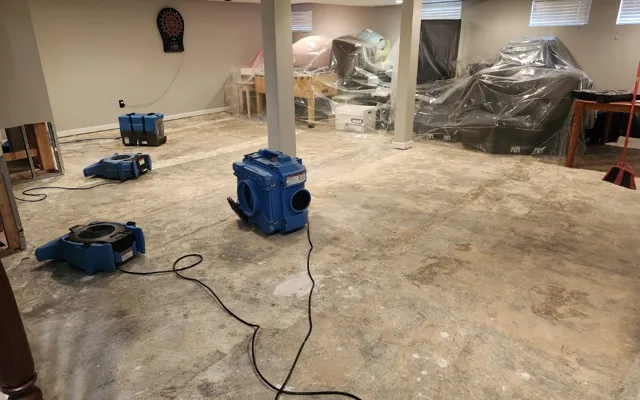
Using powerful extraction equipment, the team quickly clears standing water. They then assess and remove waterlogged materials like carpet, pad, and the lower sections of drywall to prepare the space for drying.
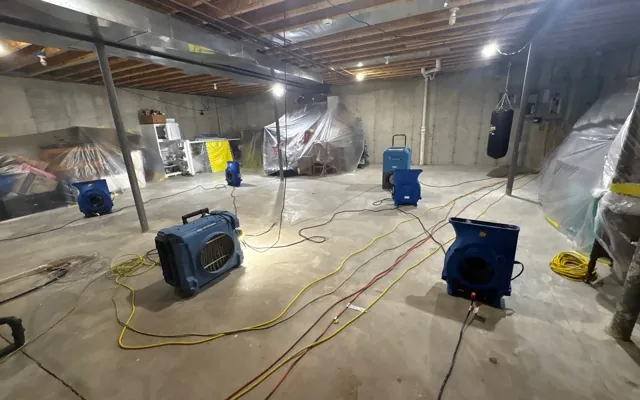
Air movers and industrial dehumidifiers are placed to dry the concrete slab and wall cavities. Technicians take repeated moisture readings until the space meets a dry standard, logging all data for the homeowner.

Basement flood cleanup in Queen Anne typically runs from about $2,000 to $7,500 depending on the square footage flooded, how much drywall and flooring must be removed, and whether the water was clean seepage or contaminated. A finished basement with saturated carpet and drywall across several rooms sits toward the high end, while a quick pump-out of a small unfinished space sits lower. The crew logs moisture readings and photos so the loss can be itemized for the carrier.
In Queen Anne, WA, the steep slopes direct groundwater and stormwater toward foundations, and the many older homes with basements or daylight basements are vulnerable. Roof leaks from worn flashing on grand, early-1900s houses can also send water cascading into lower levels, making basement flood cleanup a common call for restoration crews. Queen Anne's steep grade drives water downhill into foundations, while the neighborhood's historic housing stock often has aging plumbing and foundation details. The cool, wet marine climate means persistent moisture and the risk of roof leaks from older construction. From Queen Anne, crews also cover nearby Capitol Hill, Beacon Hill, Montlake, Madrona, Fremont, Wallingford. See every neighborhood and town on the full service area page.
See all areas servedEvery loss is photographed, measured, and logged from the first visit, so the paperwork holds up with the insurance carrier.
Technicians follow recognized IICRC drying standards and prove it with daily moisture readings on Queen Anne homes, not guesswork.
Emergency dispatch any hour of the day or night, with a real crew on the way across the Puget Sound area, not a callback in the morning.
A real crew dispatched any hour, not a callback in the morning.
Trained technicians following recognized IICRC drying standards.
Truck-mounted, portable, and submersible for any size loss.
The loss is documented and billed to the carrier directly.
Costs depend on the size of the flooded area and the materials affected. In Seattle, jobs typically range from a few thousand dollars for a simple pump-out to several thousand for a finished basement needing drywall and flooring removal. Local crews provide itemized documentation for insurance.
If water is extracted and the structure is dried thoroughly and promptly to industry standards, the risk is minimized. Local crews use air movers and dehumidifiers to dry wall cavities and concrete slabs, and they verify the results with moisture meters before finishing the job.
Crews are on call 24 hours a day and can be on the way to Queen Anne within the hour.
Call (206) 984-4939