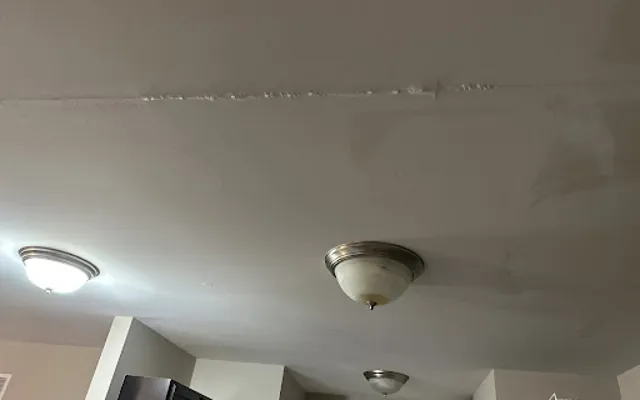
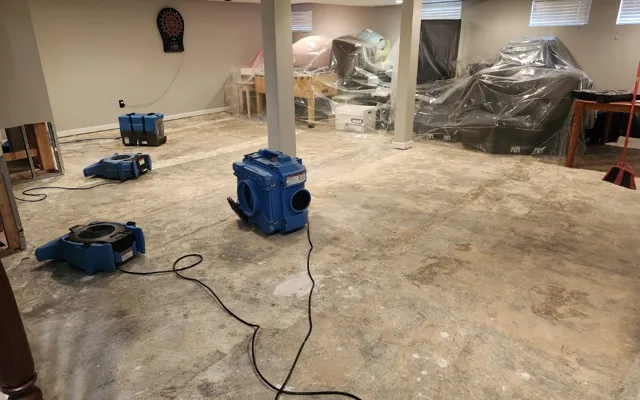
In Magnolia, WA, a fast local response can save a ceiling from collapse. Technicians follow IICRC-standard methods to trace leaks, dry cavity spaces, and document the loss for insurance, preventing hidden mold from taking hold.

A local crew quickly arrives to find where water entered, checking the roof, upstairs plumbing, or pipes. Pinpointing the origin in a Magnolia home ensures drying targets the full path, not just the visible ceiling stain.
Technicians safely release trapped water from a bulging ceiling and extract any pooling on the floor below. This controlled process prevents sudden collapse and limits secondary damage in the home's living spaces.
Air movers and dehumidifiers are placed to dry the ceiling joists and insulation above the drywall. The crew takes moisture readings to confirm the cavity is dry to IICRC standards, preventing hidden mold.

Ceiling water damage cleanup in Magnolia usually runs from about $1,000 to $4,500, depending on how much of the ceiling is saturated, whether the cavity and insulation above stayed wet, and if the drywall must be removed and replaced. A small isolated stain sits low, while a sagging, water-logged ceiling with wet insulation sits higher. The crew documents moisture readings and photos so the loss can be itemized for the carrier.
On the sloped, view-oriented lots of the Magnolia peninsula, water from a roof leak or a pipe above can travel far before appearing as a stain or sag in a ceiling. The grade that creates those views also directs runoff, meaning moisture often infiltrates from above or from saturated hillsides into the structures below. Magnolia's older homes on its wet, sloping peninsula face persistent water issues. Bluff-top roofs endure long rains that can overwhelm flashings, while downhill foundations and daylight basements receive concentrated runoff, pushing moisture upward into walls and ceilings over time. From Magnolia, crews also cover nearby University District, Georgetown, Ballard, Fremont, Wallingford, Green Lake. See every neighborhood and town on the full service area page.
See all areas servedEvery loss is photographed, measured, and logged from the first visit, so the paperwork holds up with the insurance carrier.
Technicians follow recognized IICRC drying standards and prove it with daily moisture readings on Magnolia homes, not guesswork.
Emergency dispatch any hour of the day or night, with a real crew on the way across the Puget Sound area, not a callback in the morning.
A real crew dispatched any hour, not a callback in the morning.
Trained technicians following recognized IICRC drying standards.
Truck-mounted, portable, and submersible for any size loss.
The loss is documented and billed to the carrier directly.
Drying a ceiling cavity typically takes two to four days, depending on how much insulation got wet and the home's ventilation. The humid marine climate can extend drying time, so crews use industrial dehumidifiers to manage ambient moisture and hit target dryness readings.
Not always. If the drywall is only stained or slightly damp, it can often be saved. Local crews only remove sections that are sagging, soft, or holding water to protect the structure. They focus on drying the cavity first, then advise on necessary repairs.
Crews are on call 24 hours a day and can be on the way to Magnolia within the hour.
Call (206) 984-4939