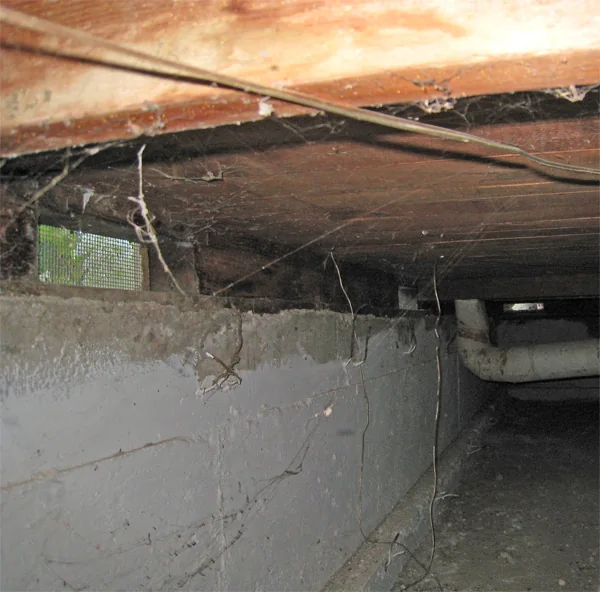
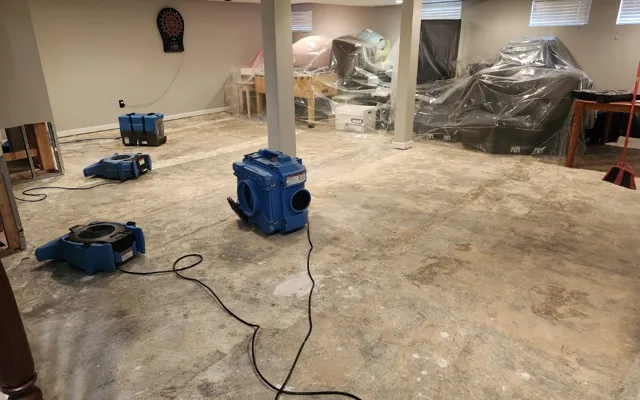
Standing water in a crawlspace can threaten the foundation and framing. Local crews in Phinney Ridge, WA, respond quickly to pump out moisture and dry the space, following IICRC-standard methods to stabilize the area under the house.

Technicians enter the crawlspace to assess standing water and trace its origin. For Phinney Ridge homes, this often involves checking if it's hillside runoff, a groundwater seep, or a leak from the aging supply lines common in the area.
The crew uses submersible pumps to clear the water from the crawlspace floor. They also remove any sections of the vapor barrier that are saturated, which is a frequent need in these damp, confined spaces under older houses.
Air movers and dehumidifiers dry the wood framing, subfloor, and remaining insulation. The team then takes moisture readings to confirm the structure is dry, a critical step before closing out a job in Phinney Ridge.

Crawlspace water removal in Phinney Ridge typically runs from about $1,200 to $5,500, depending on how much standing water is present, whether the vapor barrier and insulation must be replaced, and how much drying the framing needs. A quick pump-out sits at the low end, while a saturated crawlspace with wet insulation and rotting subfloor sits higher. The crew documents moisture readings and photos so the loss can be itemized for the carrier.
Phinney Ridge sits on a high, sloping ridge west of Green Lake, where many early-1900s homes are built on steep lots. During the region's long, wet spells, stormwater and hillside runoff can flow downhill toward these older foundations, leading to water pooling in daylight basements and crawlspaces below the structure. The neighborhood's geography, with its steep grades and older housing stock, directs rainwater toward foundations. Combined with the original plumbing and drains aging out in these historic homes, it creates a common scenario for crawlspace water intrusion in Phinney Ridge. From Phinney Ridge, crews also cover nearby Ballard, Green Lake, Ravenna, University District, Georgetown, Magnolia. See every neighborhood and town on the full service area page.
See all areas servedEvery loss is photographed, measured, and logged from the first visit, so the paperwork holds up with the insurance carrier.
Technicians follow recognized IICRC drying standards and prove it with daily moisture readings on Phinney Ridge homes, not guesswork.
Emergency dispatch any hour of the day or night, with a real crew on the way across the Puget Sound area, not a callback in the morning.
A real crew dispatched any hour, not a callback in the morning.
Trained technicians following recognized IICRC drying standards.
Truck-mounted, portable, and submersible for any size loss.
The loss is documented and billed to the carrier directly.
In Phinney Ridge, the most common sources are stormwater and hillside runoff channeled by the steep lots toward older foundations. Failing original plumbing and drain lines in these historic homes are also a frequent cause that local crews identify during inspection.
Cost depends on the amount of standing water, whether the vapor barrier or insulation needs replacement, and the extent of drying required for the framing. In Seattle, jobs range from about $1,200 for a simple pump-out to more for a fully saturated space needing extensive drying and material removal.
Crews are on call 24 hours a day and can be on the way to Phinney Ridge within the hour.
Call (206) 984-4939