In Rainier Valley, WA, HVAC condensation overflow can quickly soak a ceiling or closet. Local crews respond to trace the source, extract water, and dry the structure following IICRC-standard methods, helping prevent mold in the valley's damp environment.

Technicians confirm the HVAC is off and inspect the condensate line, drain pan, and area below in Rainier Valley homes. They map the full extent of the wet zone, which often follows wall cavities down from an attic unit.
The crew extracts pooled water from floors or pans. If water has soaked into a ceiling or closet framing common in valley apartments, they create a small access point to reach the saturated materials for drying.
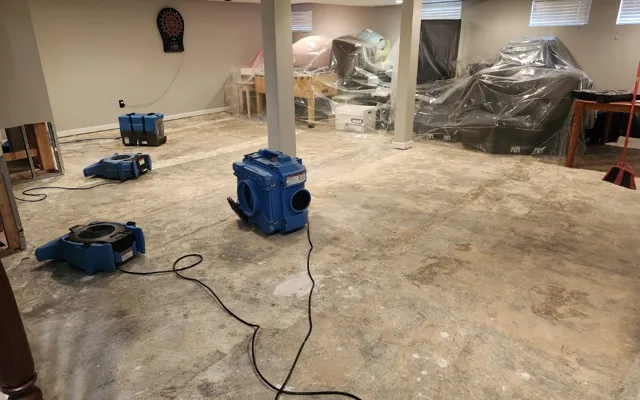
Air movers and dehumidifiers are placed to dry the affected drywall, wood, and flooring. Drying continues until moisture readings meet the target, ensuring the structure in the Rainier Valley home is ready for repairs.

HVAC condensation cleanup in Rainier Valley generally runs from about $800 to $3,500, depending on how long the overflow ran, whether it soaked a ceiling or closet framing, and how much drywall must be dried or removed. A caught-early pan overflow sits low, while a clogged line that dripped for weeks into a ceiling sits higher. The crew documents moisture readings and photos so the loss can be submitted to the carrier.
Rainier Valley's older homes and apartments often have HVAC units in closets or attics above living spaces. A clogged condensate line or a full pan here can send water down into ceilings and walls, where it soaks into drywall and framing before it's even noticed. The valley's dense construction makes these hidden leaks a common call. The valley's cool, damp climate keeps HVAC systems running for dehumidification, producing steady condensate. In older sections, aging drain lines are prone to clogs, and the slow-draining valley floor means any overflow adds to existing basement moisture issues. From Rainier Valley, crews also cover nearby Greenwood, Delridge, West Seattle, Columbia City, Wedgwood, Mercer Island. See every neighborhood and town on the full service area page.
See all areas servedEvery loss is photographed, measured, and logged from the first visit, so the paperwork holds up with the insurance carrier.
Technicians follow recognized IICRC drying standards and prove it with daily moisture readings on Rainier Valley homes, not guesswork.
Emergency dispatch any hour of the day or night, with a real crew on the way across the Puget Sound area, not a callback in the morning.
A real crew dispatched any hour, not a callback in the morning.
Trained technicians following recognized IICRC drying standards.
Truck-mounted, portable, and submersible for any size loss.
The loss is documented and billed to the carrier directly.
The main causes are clogged condensate drain lines from algae or debris, which are common in older systems, or a full secondary drain pan because the primary line is blocked. The valley's humidity also means systems produce more condensate, increasing the risk of overflow.
Drying typically takes two to four days in Rainier Valley, depending on how long the leak ran and what materials got wet. A small leak caught early may dry faster, while water in ceiling cavities or wall framing in the damp climate requires more time.
Crews are on call 24 hours a day and can be on the way to Rainier Valley within the hour.
Call (206) 984-4939