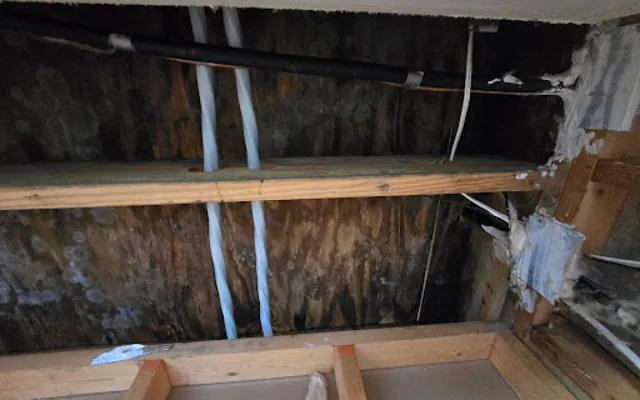
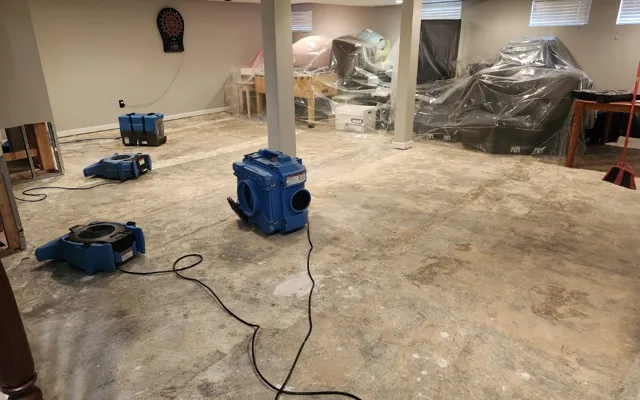
When a roof leak soaks an attic or ceiling in Queen Anne, WA, local crews respond around the clock to trace the source and start IICRC-standard drying, containing damage before it spreads through the older home.

Local crews respond at any hour to find where water is entering. In Queen Anne's older homes, they trace from interior ceiling stains back to the specific roof or flashing failure so drying targets the true wet area.
Technicians extract any standing water and perform controlled openings to relieve water trapped in sagging ceilings. This prevents further structural stress and prepares the space for thorough drying of the attic and cavities.
Saturated insulation is removed, and industrial air movers and dehumidifiers are placed to dry the attic, ceiling cavities, and walls. The crew takes moisture readings until materials meet a verified dry standard.

Roof leak water damage cleanup in Queen Anne typically runs from about $1,500 to $6,500, depending on how long the leak went unnoticed, how much attic insulation and ceiling material is saturated, and how far the water traveled inside the walls. A small isolated leak sits low, while widespread attic and ceiling saturation sits higher. The crew documents moisture readings and photos so the loss can be itemized for the carrier.
Queen Anne's steep hill and older housing stock create a particular risk for roof leak water damage. Groundwater and runoff pressure basements on the lower slopes, while vintage roofs and tired flashing on the grand homes above can let water into attics and walls, often going unnoticed until ceilings stain. The steep grade of Queen Anne hill drives stormwater into lower levels, while the cool, wet marine climate tests the aging roofs and flashings on the neighborhood's many early-1900s houses, making concealed roof leaks a common issue after heavy rain. From Queen Anne, crews also cover nearby Capitol Hill, Beacon Hill, Montlake, Madrona, Fremont, Wallingford. See every neighborhood and town on the full service area page.
See all areas servedEvery loss is photographed, measured, and logged from the first visit, so the paperwork holds up with the insurance carrier.
Technicians follow recognized IICRC drying standards and prove it with daily moisture readings on Queen Anne homes, not guesswork.
Emergency dispatch any hour of the day or night, with a real crew on the way across the Puget Sound area, not a callback in the morning.
A real crew dispatched any hour, not a callback in the morning.
Trained technicians following recognized IICRC drying standards.
Truck-mounted, portable, and submersible for any size loss.
The loss is documented and billed to the carrier directly.
Costs in Seattle typically range from about $1,500 to $6,500. The final price depends on how long the leak went unnoticed and how much attic insulation or ceiling material is saturated. A small, isolated leak costs less, while widespread attic saturation is higher. The crew provides documentation to help with insurance claims.
Local crews use moisture meters to detect water inside wall cavities. They may need to create small, strategic access points to dry those spaces completely with air movers. This process, following IICRC methods, is crucial in older homes to prevent mold within the walls after a roof leak.
Crews are on call 24 hours a day and can be on the way to Queen Anne within the hour.
Call (206) 984-4939